LinkedIn Content Creation in 2026: Time Benchmarks, Engagement Trends, and Sustainable Posting Systems
Explore 2026’s essential benchmarks for LinkedIn content creation—how much time top professionals invest, which posting frequencies and formats deliver results, and systems to overcome burnout and sustain growth.
LinkedIn Content Creation in 2026: Time Benchmarks, Engagement Trends, and Sustainable Posting Systems
LinkedIn continues to be the professional networking platform of choice for B2B growth in 2026. Yet, fundamental challenges—rising time demands, declining reach, creator burnout, and algorithm shifts—require a fresh approach founded on systemization and workflow design. This guide delivers the latest data, key trends, and actionable frameworks to maximize your impact and efficiency in the present LinkedIn landscape.
The Realities of LinkedIn Content Creation in 2026
Recent research covering millions of posts and thousands of professional accounts reveals:
- 2–5 posts per week is the sweet spot for B2B visibility, driving over 1000% higher impressions compared to minimal posting. Above this range, content begins to cannibalize reach.
- AI-assisted workflows now enable subject-matter experts to contribute authentic ideas in as little as 15 minutes per piece, with content teams handling formatting and scheduling.
- The average B2B professional spends 4–8 hours weekly on ideation, drafting, editing, and responding to engagement—unless systems are in place to streamline the process.
Why Manual LinkedIn Execution Fails in 2026
LinkedIn’s algorithm and audience behaviors have evolved:
- Document posts (PDF/carousels) now average 6.6% engagement rates, compared to less than 2% for generic text updates.
- Video grew 36% year-over-year, but must be short (30–90 seconds) and natively uploaded for best distribution.
- External links are penalized, reducing reach by up to 60%.
- Newsletter content sidesteps the changing feed algorithm, consistently reaching subscribers’ inboxes and notifications.
For founders and consultants, these shifts mean that sporadic, manual efforts rarely deliver sustainable results. The success patterns all point toward systematized workflows that remove redundancy and preserve authentic insights.
2026 Posting Frequency, Timing, and Format: What Works?
- Personal profiles succeed with 2–5 posts weekly, reinforcing presence without overwhelming audiences.
- Peak engagement: Wednesday 4 p.m. outperforms all other time slots, with Tuesday and Thursday mornings also strong (8–10 a.m.).
- Video and carousel formats yield the highest ROI; standard text posts struggle unless paired with strong hooks and zero external links.
More isn’t better: Platform changes now reward content depth, topic expertise, and audience interaction—especially within the first 60 minutes of posting.
Why Systems and Automation Matter More Than Ever
The data is clear: The difference between LinkedIn frustration and compounding success isn’t posting volume, but the quality, format, and sustainability of your workflow. Key automation and system benefits include:
- Reduced time spent: Move from 8+ hours weekly to 2–3 focused hours with automated idea capture and drafting.
- Consistent quality: Standardize editing, peer review, and scheduling for each post.
- Burnout prevention: Remove manual bottlenecks and leverage algorithm-favored formats, allowing your expertise to scale without draining creativity.
- Reach stability: Automated scheduling aligns content delivery with peak engagement times—even across multiple time zones.
Building a Future-Proof LinkedIn Content System in 2026
1. Centralize Content Ideas
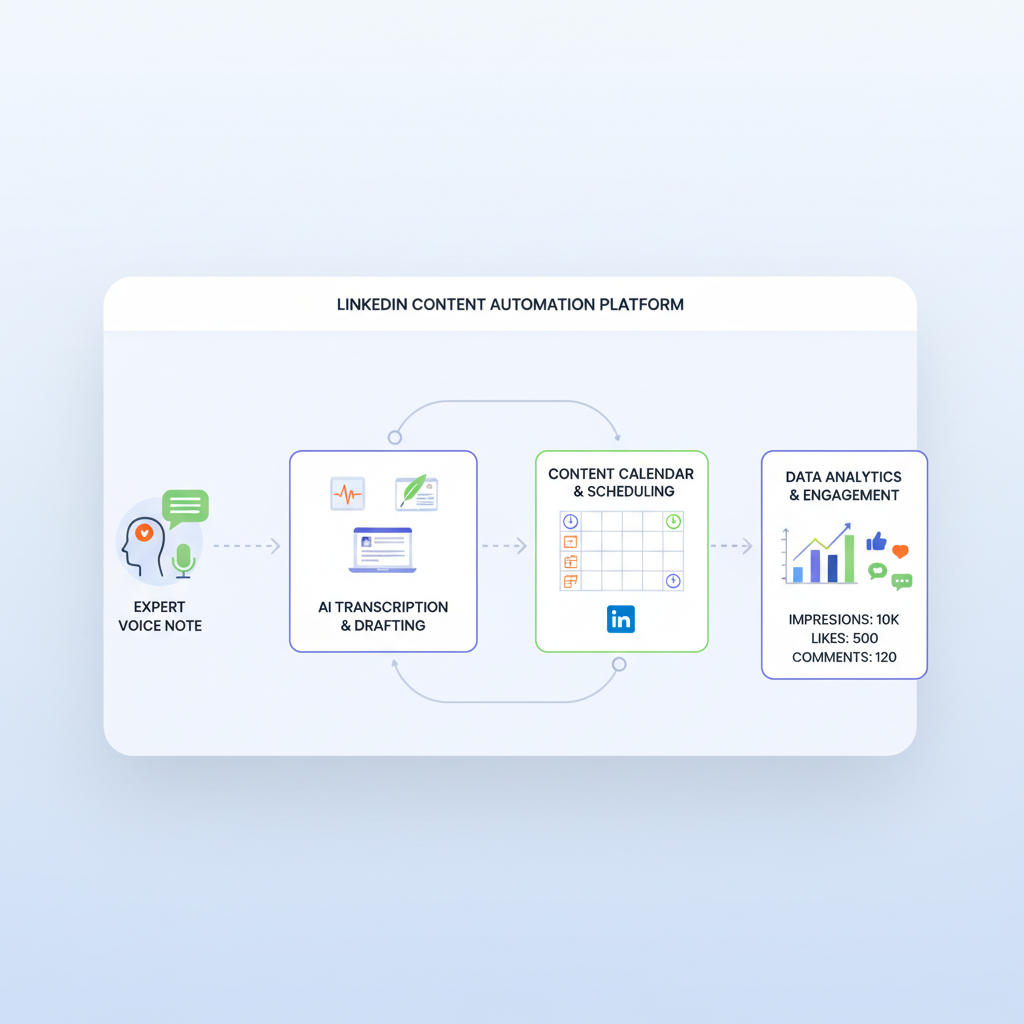
Capture voice notes, questions, and insights into a systemized repository. Use AI to transcribe and surface the strongest ideas for team drafting.
2. Automate Formatting and Scheduling
Use tools to automatically turn expert insights into carousel, video, or newsletter formats, batch scheduling posts to match high-engagement time slots.
3. Monitor Real Engagement
Shift from vanity metrics to LinkedIn’s Depth Score: prioritize content that drives meaningful clicks, comments, and DMs over surface-level likes.
4. Review and Optimize Workflows
Hold monthly workflow reviews to eliminate friction, reassess timing, and reallocate effort to the highest-performing formats. Pair tech with human strategy for ongoing improvement.
Practical Example: A Consultant’s Weekly System
- Every Friday: Record 2–3 voice notes outlining market lessons and client FAQs.
- Monday: Have an assistant or AI tool transcribe, summarize, and format into one carousel, one video, and one text post.
- Tuesday–Thursday: Schedule or automate posting for optimal slots suggested by the latest data.
- Engage with comments and adapt future content based on Depth Score and real discussions.
From Theory to Practice: Systematize Your LinkedIn Success with Beamio
Manually trying to keep up with LinkedIn’s rapid pace and evolving algorithms is unsustainable. System-driven automation isn’t just a competitive advantage—it’s the foundation of scalable, personalized LinkedIn growth in 2026.
Platforms like Beamio enable founders, consultants, and solopreneurs to automate fully personalized LinkedIn posting, integrate AI-powered content drafting, and systemize every core workflow step. This means consistent presence, more time for strategy, and measurable inbound results—without sacrificing authenticity or burning out.
Ready to build your own LinkedIn content engine? Discover how Beamio automates LinkedIn posting with 100% personalized content at www.beamio.io.
Read Next
Optimizing LinkedIn Posting in 2026: Automation and Workflow Strategies for B2B Founders
Jan 19, 2026
LinkedIn Content Systems in 2026: Automation, Consistency & AI for B2B Growth
Jan 20, 2026
LinkedIn Content Consistency in 2026: Workflow Automation for Founders, Consultants, and Solopreneurs
Jan 21, 2026